
This is a guest post by Rohan Mehta, a solo traveler and travel tech enthusiast who writes about staying safe, connected, and confident on the road. Having traveled independently across Asia and Europe, he enjoys exploring how simple tools and smart planning can make solo journeys more empowering.
You know that moment. You are sitting in a cafe in a city you have never been to before, your phone is almost dead, you have no idea how far your hotel is, and the last message your mum sent was "call me when you land", three days ago. You are completely fine. But she does not know that. And somewhere between your third attempt at finding the right street and your first real wave of travel anxiety, you realise something uncomfortable: if anything actually went wrong right now, nobody would know where to look.
That feeling does not go away on its own. You can share your itinerary before you leave, check in every morning, and message your group chat every time you reach a new city. But itineraries change, mornings get busy, and signal disappears exactly when you need it most. The gap between "I am having the adventure of my life" and "nobody knows where I am right now" is smaller than most solo travelers want to admit.
A personal GPS tracker closes that gap. Not by limiting your freedom, you still go wherever you want, whenever you want. What it does is make sure that the people who care about you can find you without you having to do anything at all. And once you travel with one, going back feels genuinely reckless.
Solo Travel Is Booming - But the Safety Anxiety Is Just as Real
More people are travelling alone than ever before. The global solo travel market hit $482 billion in 2024 and is growing at 14% a year. Booking.com reports that 59 percent of their customers now actively want to travel solo, and 70% of travel insurance policy sales in 2024 were for single travelers.
But here is the number that rarely makes the travel trend headlines: 65 percent of female solo travelers say personal safety concerns are what holds them back from travelling alone more often. Not cost. Not logistics. Safety.
The desire to travel solo is not the problem. The gap between wanting to go and feeling fully prepared to go is where most people get stuck. A GPS tracker does not solve every safety concern, but it does solve the most specific and most exhausting one, whether someone can find you if something goes wrong.
A GPS Tracker Is Not What Most People Think It Is
Most solo travelers assume their phone already does what a GPS tracker does. It does not, and this is the single most important thing to understand before you dismiss the idea.
Your phone's location works when your phone is on, charged, connected, and not in airplane mode. WhatsApp Live Location requires an active internet connection. Life360 and Google Maps location sharing stop the moment your data drops or your battery dies. These are phone-dependent tools, which means they fail in exactly the scenarios where you actually need them most.
A personal GPS tracker works independently of all of that. You clip it to your bag, slip it into your jacket pocket, or tuck it into your luggage. It has its own cellular connection and its own battery. It sends your location to a secure app every 30 seconds to a few minutes, continuously, whether your phone is dead, lost, stolen, or just switched off to save battery on a long hiking trail.
The person you share your location with your travel buddy, your partner, your mum can check where you are from their phone at any time without you doing anything at all. No message needed. No signal needed on your end. The tracker handles it on its own. That independence is the whole point, and it is the one thing no phone app can replicate.
The Moment That Changes How You Think About This
Let me tell you about a real scenario that is more common than people realise. In North Carolina, a woman was involved in a car accident on a rural road, pinned under the vehicle, unable to reach her phone.
Her family, tracking her location through a GPS device she carried, saw her stop moving in an area she was not supposed to be. They contacted emergency services with her exact coordinates. Rescue teams reached her in time.
That is not a dramatic edge case. That is what a GPS tracker is actually for, not for the inconvenient moments, but the one moment when inconvenient becomes something much more serious. Solo travelers who hike trails like those around Sedona in Arizona, the Blue Ridge Parkway near Asheville, or the backcountry paths around the Grand Canyon know exactly how quickly a good trail day can turn into something your phone cannot help you with.
A tracker does not prevent accidents. What it does is make sure that when one happens, someone knows exactly where you are while you still need them to.
The Specific Situations Where Solo Travelers Say It Earned Its Place
Beyond the genuine emergencies, here are the everyday situations where solo travelers consistently say they were glad they had a GPS tracker running:
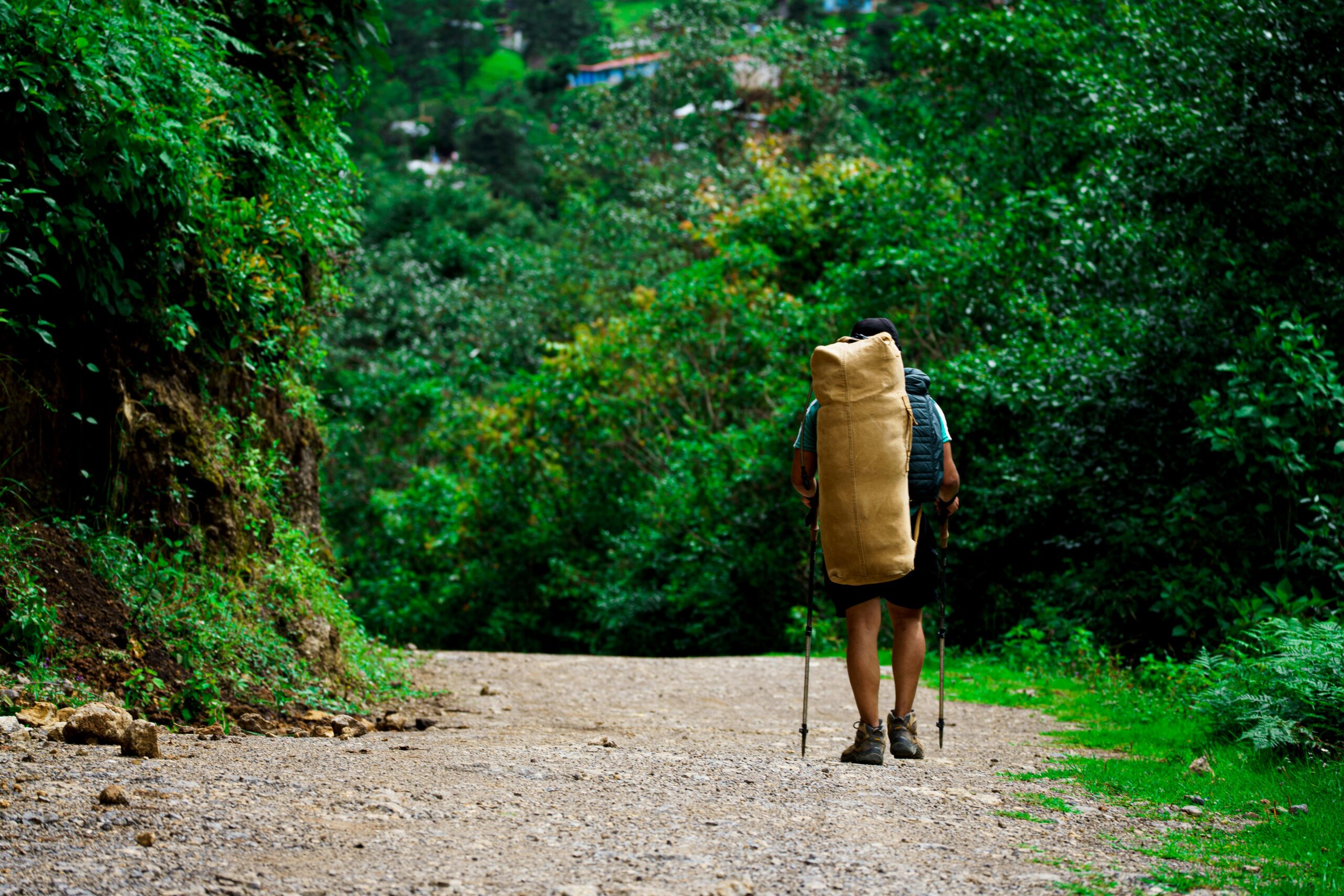
- Hiking remote trails alone: Places like Sedona, Asheville, and national parks across the American Southwest are stunning precisely because they are off the grid. Signals disappear, trails split, and an afternoon hike can turn into a navigation problem in the time it takes the light to change. A tracker keeps transmitting your location even when your phone has nothing.
- Late nights out in unfamiliar citie:. New Orleans at midnight, Nashville after a long evening on Broadway, Chicago's Wicker Park at 1am, solo travel at night is one of the best parts of travelling alone, and also the part where family and friends worry most. A tracker running quietly in your bag means nobody is sitting at home refreshing their WhatsApp.
- Moving through multiple countries in one trip: Time zones shift, check-ins get forgotten, and your family genuinely loses track of where you are supposed to be. A continuously updating tracker is far more reliable than the message you meant to send two countries ago.
- Checking luggage into hotel storage: You land early in Chicago, Seattle, or New York and your room is not ready. You leave your bag with the front desk. A small tracker inside your suitcase means you can actually see whether your luggage stays where it should be.
- Anywhere your gut says to be more careful: Every experienced solo traveler has places where they instinctively tighten up. A tracker running in the background does not make you paranoid. It makes you prepared, which is a completely different feeling.
Why International Solo Travel Changes the Stakes Entirely
Domestic solo trips are one thing. International solo travel is where the stakes feel genuinely higher, and for good reason.
When you travel internationally, the systems you rely on at home stop working the way you expect. Your phone carrier may throttle your data. Roaming charges make you check your phone less. Local SIM cards take time to sort out. And some destinations have genuinely patchy coverage outside of city centres. Dubai is wonderfully connected in the city itself, but head out toward the Hatta mountains for a weekend hiking trip and your signal drops off quickly into terrain that is stunning but remote.
The same applies to road trips through the American Southwest, solo trips through Southeast Asia, or any itinerary that takes you off the main tourist track. A GPS tracker with international coverage continues transmitting your location regardless of which country's cell network is available, because it uses its own SIM across multiple carriers simultaneously. Your family does not need to wait for you to find Wi-Fi to know you are okay. That matters more than most people realise until they are the one who is out of signal.
One habit worth building before any international trip: set up location sharing with at least two contacts, not one. If your primary contact is asleep in a different time zone when something happens, your second contact is who matters. It takes two minutes to set up and you will never regret having done it.
What to Actually Look for When Buying a Personal GPS Tracker
The market has a lot of options and the price range is wide enough to be confusing. Here is what genuinely separates a useful travel tracker from one that looks good on a product page and lets you down when it counts:
- Real-time updates, not periodic check-ins: Some cheaper trackers update your location every 5 to 10 minutes. At that interval, a lot can change. Look for devices that update every 30 seconds to two minutes during active use. Real-time is the only setting that actually delivers peace of mind for solo travel.
- Battery life that matches how you actually travel: If you spend long days outdoors, you need a tracker that lasts a full day at minimum without needing a charge. Some devices last two to three days. The one that runs out halfway through your trail was not there when you needed it.
- International cellular coverage: This is what most people overlook. Confirm the tracker works across multiple countries before you buy it, especially if your trip spans more than one destination. A device that works on only one carrier in one country is a domestic tracker being marketed as something else.
- Size and discretion: The best travel trackers slip into a bag pocket, clip onto a keyring, or tuck into luggage without adding noticeable weight. If a tracker is too bulky to carry comfortably, you will leave it in the hotel. That defeats the purpose entirely.
- Flexible subscription, not a long-term contract: You should not pay for 12 months of coverage if you travel for three. Look for month-to-month or trip-based plans that match how often you actually go.
For solo travelers wanting a professional-grade option, BrickHouse Security's international GPS trackers cover all of the above. Compact, built for real daily use, and running on a platform trusted by individual travelers and professional organisations across the United States since 2005. The app is clear, updates are genuinely real-time, and subscription options are flexible enough for the way most solo travelers actually travel.
But Does Tracking Kill Your Independence?

This is the question that comes up every single time, and it is a completely fair one.
You decide who sees your location and when. You share your tracker's position with specific contacts through the app, before your trip, on your terms. You can pause sharing at any time. You can limit it to certain hours. The tracker is not broadcasting your location to anyone who searches for it and sending your position to exactly the contacts you approved, with exactly the settings you chose.
There is a real difference between surveillance and safety sharing. Surveillance is someone tracking you without your knowledge or consent. Safety sharing is choosing to let the people who love you know where you are so they can stop spending your entire trip quietly catastrophising in the background. Most solo travelers who try it once say the same thing afterward: they had not realised how much mental energy was going toward managing other people's anxiety from a distance until a tracker quietly took that task off their plate.
Where It Fits on Your Packing List
Think of it the same way you think about travel insurance. Most trips go perfectly. You probably will not need either one. But the cost of not having them on the one trip where something goes sideways is significantly higher than the cost of carrying both every single time.
A personal GPS tracker sits naturally alongside the other smart solo travel items experienced travelers carry: a portable power bank, a VPN for public Wi-Fi, a door alarm for solo hotel stays, and a copy of your passport stored separately from the original. None of these ruin the adventure. All of them mean the adventure is something you can fully enjoy rather than something you spend quietly managing from the back of your mind.
For anyone planning international solo trips across multiple countries, BrickHouse Security offers GPS tracking options designed specifically for cross-border use, with cellular coverage that works across networks so your location stays visible regardless of which country you happen to be in that week.
Conclusion
Solo travel is one of the most rewarding things you can do for yourself. The freedom, the self-reliance, the way the world opens up differently when you are navigating it entirely on your own terms, there is genuinely nothing quite like it.
A GPS tracker does not take any of that away. Knowing your location is being shared quietly in the background does not change the adventure. What it changes is the conversation you have with yourself at 11pm in an unfamiliar neighbourhood, and the daily call back home to prove you are still alive. It gives everyone, including you, a little more room to breathe.
Pack your adapter. Pack your travel insurance documents. Pack your portable charger and three more pairs of socks than you actually need. Add a GPS tracker to that list. You will use the socks more often. But you will be very glad the tracker was there on the one day you actually needed it.
FAQs
Q: Is a GPS tracker worth it for solo travel?
Yes, and the value shows up in two ways. The practical side: a GPS tracker works independently of your phone, so your location keeps transmitting even when your battery dies, your signal drops, or you are somewhere with no data.
The emotional side: your family stops worrying every time you go quiet for a few hours, which means fewer anxious check-in calls and more freedom to actually enjoy the trip. For solo travelers who move through remote areas or multiple countries, it is one of the most useful things in the bag.
Q: What is the difference between a GPS tracker and sharing location on WhatsApp?
WhatsApp Live Location, Life360, and Google Maps location sharing all depend on your phone being on, charged, and connected to the internet. The moment your battery dies or your data drops, sharing stops. A dedicated GPS tracker has its own battery and its own cellular connection, so it transmits your location independently of whatever is happening with your phone.
That independence is what makes it genuinely useful in the situations where location sharing actually matters.
Q: Can I use a personal GPS tracker in another country?
Most personal GPS trackers work internationally, but you need to check before you buy. The best travel-focused trackers use multi-carrier SIM technology, which automatically connects to available local networks across countries without requiring a local SIM from you.
Confirm that the device explicitly supports the countries on your itinerary and that the subscription plan covers international use. Some trackers are domestic only and will not transmit once you cross a border, which makes them useless for international solo travel.